

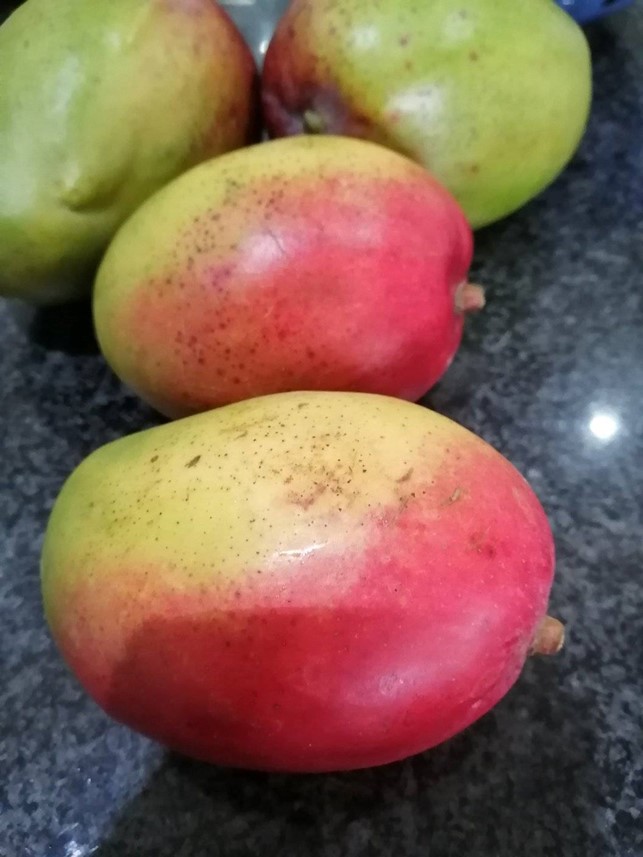
Unlike Mango airlines, mango fruit makes Summer sweeter
During warmer months we are blessed with some delicious fruit. One such fruit is the mango, a tropical fruit originally stemming from India.
As far back as the 1600s, mangoes were brought to South Africa. There are certain areas of the country., where mangoes grow exceptionally well. To know if a mango is ripe, just press it with your finger. A hard mango is not yet ripe and it would be best to leave it to soften and ripen. There should also be a subtle fruity aroma when you smell the mango close up, indicating it is ready to be eaten. Mangoes have a skin colour of orange-yellow and/or reddish and/or green. Beneath this skin is a soft deep rich yellow/orange soft inner juicy fruit.
A hard large (sometimes hairy/fibrous) pip is in the centre of the fruit. Normally you would discard the pip, yet if you open it there usually is an inner seed also known as ‘gutli’. Unripe mango seeds can be ground into a type of ‘butter’. Interestingly mango seeds have been well used for medicinal and cosmetic purposes (body creams). Ripe seeds are much harder and ground into powder. From there they have been further prepared to assist in treating diarrhoea and assist in reducing high blood sugar levels. These uses may fall under folk remedies and more research may be needed to ensure the best preparation and safe doses.
A cup of mango pieces contributes about 100 calories, which is small in your overall dietary calorie daily intakes. Mangoes are high in fibre and antioxidants and vitamins such as vitamin A and C.
In rare cases one may be allergic to mangoes. Mango can be enjoyed as dried fruit (although this form will be more concentrated in sugar and significantly contribute more calories), mango juice or in fresh form.
While being a warming food, mangoes are especially beneficially for people that feel cold more than others. Regardless though, for most of us, mangoes help us feel more nurtured and nourished.
By Anastacia Sampson
